Don’t Blow Into Food: Prophetic Warning & Scientific Truth
Don’t blow into food or drink is a wise teaching important for Muslim communities and all those who care about health and hygiene.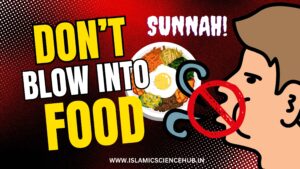
The Prophetic guidance advises against this habit to protect both our spirit and body from harm.
Hadith
[translate:لَا تَنْفُخْ فِي طَعَامِكَ وَلَا شَرَابِكَ]
“Do not blow into your food or drink.” — Sahih Muslim (2060)
This timeless advice combines spiritual wisdom with modern science, as blowing can spread harmful bacteria, making it crucial for public health awareness.
Qur’an & Hadith Guidance on Don’t Blow Into Food
The Prophet Muhammad (peace be upon him) gave clear advice against blowing into food or drink. This was to keep us clean and healthy. Scholars explain this teaching as a way to protect both the body and spirit from harm. It is part of the Islamic focus on hygiene and mindful eating.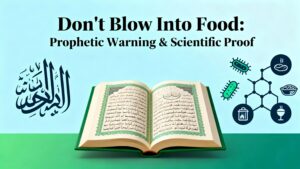
Hadith
[translate:لَا تَنْفُخْ فِي طَعَامِكَ وَلَا شَرَابِكَ]
“Do not blow into your food or drink.” — Sahih Muslim (2060)
Qur’an
[translate:يَا أَيُّهَا الَّذِينَ آمَنُوا كُلُوا مِن طَيِّبَاتِ مَا رَزَقْنَاكُمْ وَاشْكُرُوا لِلَّهِ إِن كُنتُمْ إِيَّاهُ تَعْبُدُونَ]
“O you who have believed, eat from the good things which We have provided for you and be grateful to Allah if it is [indeed] Him that you worship.” — (Quran 2:172)
This Qur’anic verse reminds us to eat good and clean food and to be thankful. The advice about not blowing into food fits well with these principles of cleanliness, gratitude, and health care.
Scientific Explanation: Why Not to Blow Into Food
Blowing into hot food or drink can carry bacteria and viruses from the mouth onto the food surface, increasing the risk of contamination and potential illness.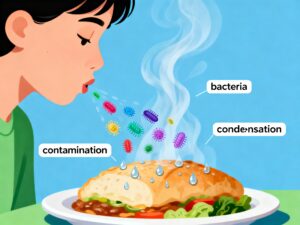
Step 1: Transfer of Microbes
Our mouths naturally contain many microorganisms, including harmless bacteria and some that may be harmful. When you blow air from your mouth, tiny droplets carrying these microbes land on the food or drink.
Step 2: Effect of Hot Temperature and Condensation
Hot food creates steam, and blowing warm air onto it causes condensation — small water droplets form on the food’s surface. These droplets create a moist environment perfect for bacteria to grow faster.
Step 3: Bacterial Growth and Food Safety
Studies in microbiology show that bacteria multiply quickly in moist conditions, especially on warm surfaces like hot food. This growth can lead to food spoilage and increase the chances of foodborne illnesses.
Step 4: Islamic Wisdom and Modern Science
The Prophet Muhammad’s (peace be upon him) advice to avoid blowing into food aligns perfectly with modern scientific knowledge about germs and health safety practices. This connection shows how traditional guidance also promoted public health centuries ago.
Qur’an
[translate:يُرِيدُ ٱلشَّيْطَـٰنُ أَن يُوقِعَ بَيْنَكُمُ ٱلْعَدَاوَةَ وَٱلْبَغْضَاءَ فِي ٱلْمَآءِ وَٱلْدِّمَآءِ وَيَصُدَّكُمْ عَن ذِكْرِ ٱللَّهِ وَعَنِ ٱلصَّلَوٰةِ ۚ فَهَلْ أَنتُم مُّنتَهُونَ]
“Satan threatens you with poverty and commands you to immorality, while Allah promises you forgiveness from Him and bounty. And Allah is all-Encompassing and Knowing.” — (Quran 2:268)
This verse indirectly reminds of the dangers that can come from harmful contamination, encouraging believers to adopt safe and clean practices.
Wisdom Behind the Prophetic Advice
Islam teaches a complete approach to health and cleanliness, focusing on preventing harm before it happens. This includes caring for both the body and the soul, showing a balance between spiritual and physical well-being.
The advice of the Prophet (peace be upon him) to avoid blowing into food reflects this holistic care. It prevents the spread of germs while also guiding us to be mindful and respectful during eating.
Many modern studies now confirm these teachings. What was once spiritual wisdom is today understood as good health practice, showing that prophetic traditions anticipated principles now proven by science.
Hadith
[translate:إِنَّ ٱلطَّهُورَ شَطْرُ ٱلْإِيمَـٰنِ]
“Purity is half of faith.” — (Sahih Muslim 223)
Qur’an
[translate:وَإِن تَعُدُّواْ نِعْمَةَ ٱللَّهِ لَا تُحْصُوهَآ ۗ إِنَّ ٱللَّهَ لَغَفُورٌ رَّحِيمٌ]
“If you should count the favors of Allah, you could not enumerate them. Indeed, Allah is Forgiving and Merciful.” — (Quran 16:18)
This shows the deep spiritual meaning behind caring for cleanliness and health—it’s part of thankfulness to Allah for the blessings of life and well-being.