The Ultimate Truth About Ensoulment in Islam: 120-Day Miracle, Hadith, Science & Abortion Facts

The Ultimate Truth About Ensoulment in Islam

When does life truly begin? This is a question asked by scientists, ethicists, and believers across the world.

According to a famous hadith, an angel visits the developing embryo in the womb and breathes the soul at 120 days:

Hadith (Sahih Bukhari 3208)

ثُمَّ يُرْسَلُ إِلَيْهِ الْمَلَكُ فَيَنْفُخُ فِيهِ الرُّوحَ

“Then the angel is sent to him and breathes into him the soul…” (Sahih Bukhari 3208)

Understanding ensoulment in Islam and Science is essential. It guides us in important questions about bioethics, abortion, our spiritual journey, and how science and faith align in modern debates.Embryology in the Quran, Quran and embryology, Embryonic stages in Quran, Human development in Islam, Stages of fetus in Quran,ensoulment in islam

The topic of ensoulment in Islam—especially the moment at 120 days in the womb—is central to Islamic bioethics, shapes every major fatwa on abortion and ensoulment, and raises the key question: when does the soul enter the fetus in Islam?

Ensoulment in Islam: The Hadith of the Angel at the Fetus

Embryonic Stages in Hadith

  • 40 days: Nutfah (drop of fluid)
  • 40 days: Alaqah (clinging clot)
  • 40 days: Mudghah (chewed lump)

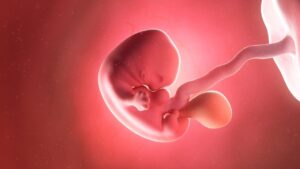
Sahih al-Bukhari explains these stages in detail, describing how the embryo develops step by step over 120 days. At 120 days in the womb, Islam teaches the soul enters the fetus. This timing shapes many Islamic rulings.Embryology in the Quran, Quran and embryology, Embryonic stages in Quran, Human development in Islam, Stages of fetus in Quran,Ensoulment in islam
Hadith (Sahih al-Bukhari 3208)

إِنَ أَحَدَكُمْ يُجْمَعُ خَلْقُهُ فِي بَطْنِ أُمِّهِ أَرْبَعِينَ يَوْمًا نُطْفَةً، ثُمَّ يَكُونُ عَلَقَةً مِثْلَ ذَلِكَ، ثُمَّ يَكُونُ مُضْغَةً مِثْلَ ذَلِكَ، ثُمَّ يُرْسَلُ إِلَيْهِ الْمَلَكُ فَيُنْفَخُ فِيهِ الرُّوحُ، وَيُؤْمَرُ بِأَرْبَعِ كَلِمَاتٍ: بِكَتْبِ رِزْقِهِ، وَأَجَلِهِ، وَعَمَلِهِ، وَشَقِيٌّ أَوْ سَعِيدٌ

“Each of you is collected in his mother’s womb for forty days as a drop (nutfah), then he becomes a clot (alaqah) for a like period, then a lump (mudghah) for a like period. Then the angel is sent to him, who breathes the soul into him and is commanded with four matters: to write his provision, his life span, his deeds, and whether he will be miserable or happy.” (Sahih al-Bukhari 3208)

Angel’s Role at 120 Days

At 120 days, the angel is sent, the soul is breathed into the fetus, and the angel records deeds, lifespan, sustenance (rizq), and whether the child will be blessed or wretched.

Sahih Muslim Addition

Another narration in Sahih Muslim says after 42 nights, the angel shapes the child’s features, then begins writing destiny.

Hadith (Sahih Muslim 2645a)

إِذَا مَرَّ عَلَى النُّطْفَةِ ثِنتَانِ وَأَرْبَعُونَ لَيْلَةً، بَعَثَ اللَّهُ إِلَيْهَا مَلَكًا فَصَوَّرَهَا، وَخَلَقَ سَمْعَهَا وَبَصَرَهَا وَجِلْدَهَا وَلَحْمَهَا وَعِظَامَهَا

“When forty-two nights have passed over the drop (nutfah), Allah sends an angel to shape it and create its hearing, sight, skin, flesh and bones…” (Sahih Muslim 2645a)

Classical Commentary

Leading scholars like Imam Nawawi have explained that these hadiths are not in conflict. Shaping (taswir) and destiny begin earlier, while actual ensoulment and the main record of fate happen at 120 days. This shows both precision and Divine wisdom in Islamic teachings.

AspectSahih al-BukhariSahih Muslim
Developmental StagesNutfah (drop) →
Alaqah (clot) →
Mudghah (chewed lump)
Nutfah (drop) →
Alaqah (clot) →
Mudghah (chewed lump)
Stage DurationsEach stage lasts ~40 days, totaling 120 daysSimilar stages, but highlights shaping and destiny questions at 42 days
Soul (Ruh) Entry / Angel’s RoleAfter 120 days: Angel breathes in the soul (ensoulment) and writes deeds, rizq, lifespan, fateAt around 42 days: Angel shapes features, then records gender, lifespan, rizq, fate
Hadith ReferenceSahih al-Bukhari 3208

ثُمَّ يُرْسَلُ إِلَيْهِ الْمَلَكُ فَيَنْفُخُ فِيهِ الرُّوحَ


“Then the angel is sent to him and breathes into him the soul…”
Sahih Muslim 2645a

إِذَا مَرَّتْ عَلَى النُّطْفَةِ ثِنْتَانِ وَأَرْبَعُونَ لَيْلَةً بَعَثَ اللَّهُ إِلَيْهَا مَلَكًا يُصَوِّرُهَا


“When forty-two nights have passed over the drop, Allah sends an angel to shape it…”
Scholarly NotesMost scholars interpret Bukhari’s “similar period” as 40+40+40 = 120 days; ensoulment after this period
Source[1]
Muslim narration shows destiny writing starts earlier (42 days) and details shaping, but the soul’s entry is interpreted as completed around 120 days
Source[1]

Qur’anic Background

The concept of ensoulment in Islam is deeply connected to the Qur’an, which discusses 120 days in the womb as the point of soul entry, shaping Islamic bioethics and every major fatwa on abortion and ensoulment, leading scholars to ask, when does the soul enter the fetus in Islam?Qur'an & Science

Surah Al-Mu’minun (23:12–14)

وَلَقَدْ خَلَقْنَا الْإِنسَانَ مِن سُلَالَةٍ مِّن طِينٍ (١٢) ثُمَّ جَعَلْنَاهُ نُطْفَةً فِى قَرَارٍ مَّكِينٍ (١٣)
ثُمَّ خَلَقْنَا النُّطْفَةَ عَلَقَةً فَخَلَقْنَا الْعَلَقَةَ مُضْغَةً فَخَلَقْنَا الْمُضْغَةَ عِظَامًا فَكَسَوْنَا الْعِظَامَ لَحْمًا ثُمَّ أَنشَأْنَاهُ خَلْقًا آخَرَ فَتَبَارَكَ اللَّهُ أَحْسَنُ الْخَالِقِينَ

“We created man from an extract of clay. Then We placed him as a sperm-drop in a firm lodging. Then We made the sperm-drop into a clinging clot, and We made the clot into a lump, and We made the lump into bones, and We clothed the bones with flesh, then We developed him into another creation. So blessed is Allah, the best of creators.” (Surah Al-Mu’minun 23:12–14)

Tafsir: These verses detail the stages of human creation—clay, drop, clot, lump, bones, then flesh—which perfectly mirror the stages given in prophetic hadith. Early scholars said this harmony of Qur’an and Sunnah is a divine sign: spiritual truth and real-world observation agree, strengthening both faith and science.

Surah Az-Zumar (39:6)

خَلَقَكُم مِّن نَّفْسٍ وَاحِدَةٍ ثُمَّ جَعَلَ مِنْهَا زَوْجَهَا وَأَنزَلَ لَكُم مِّنَ الْأَنْعَامِ ثَمَانِيَةَ أَزْوَاجٍ ۚ يَخْلُقُكُمْ فِي بُطُونِ أُمَّهَاتِكُمْ خَلْقًا مِّن بَعْدِ خَلْقٍ فِي ظُلُمَاتٍ ثَلَاثٍ

“He created you from a single soul, then made from it its mate, and sent down livestock for you. He creates you in your mothers’ wombs, creation after creation, in three layers of darkness…” (Az-Zumar 39:6)

Tafsir: “Creation after creation in three darknesses” refers to how we develop step by step in the protected womb—scholars explain this as the belly, the womb, and the membrane surrounding the fetus. The verse affirms God’s power and wisdom in every human’s journey from a single cell to a living child, echoing the hadith’s sequence of phases.
(Paraphrased from Tafheem al-Qur’an and Towards Understanding the Qur’an [web:19])

These Qur’anic verses depict precise stages of development, beautifully matching hadith details and providing a bridge between scripture and science.
Biomedical Insights

Biomedical insights explore how ensoulment in Islam at 120 days in the womb influences Islamic bioethics, every important fatwa on abortion and ensoulment, and scientific answers to the question of when does the soul enter the fetus in Islam.

Embryology Timeline & Hadith Comparison

  • 0–40 days (Nutfah):
    Fertilization starts; cell division forms the blastocyst. By day 6–7, implantation in the womb occurs. By week 3, the primitive heart forms and heartbeat is detected via ultrasound. Cell layers (ectoderm, mesoderm, endoderm) lay the foundation for organ systems.
  • 40–80 days (Alaqah):
    Organogenesis peaks; organs like the brain, spinal cord, liver, and kidneys visibly develop. Tiny limb buds and facial features emerge. By week 6-8, main organ systems are mapped out—but not yet functional as in a newborn.
  • 80–120 days (Mudghah):
    Muscles, bones, nerves all mature. Rapid brain growth and the beginnings of conscious movement (“quickening”) occur; mothers may start to feel fetal movement. Touch reflexes appear; the face, hands, and feet become well defined.

Each scientific stage closely echoes the Prophet’s ﷺ teaching of nutfah, alaqah, and mudghah. Modern embryology continues to confirm the timelines from the hadith.

Brain, Awareness & The “Soul”

Around 18–20 weeks (4.5–5 months), the cerebral cortex forms connections—crucial for sensation and early awareness. This period aligns with classical views on ensoulment. The start of voluntary movement and rapid brain cell growth marks a bridge between biological and spiritual life.

In hadith: The angel’s visit at 120 days links closely to observable brain milestones—suggesting harmony, not conflict, between science and sacred tradition.

Epigenetics & Written Destiny

Current research in epigenetics finds that the womb’s environment, nutrition, and even a mother’s stress can “write” and alter which genes are active—shaping a child’s health, risk of disease, habits and even temperament long before birth.
This mirrors the angel’s writing of rizq, deeds, and lifespan described in hadith: biology and faith converge, showing how destiny and opportunity begin before birth.

Note: Islamic insights inspire respect for both destiny (qadar) and scientific reality. The womb is a place of both sacred potential and biological programming.

Islamic Bioethics & Law

Abortion Rulings and 120-Day Ensoulment

The majority of scholars agree that abortion after 120 days is strictly forbidden, since the soul is believed to be breathed into the fetus at this milestone, based on the hadith (proof: Sahih Bukhari 3208). The ruling is rooted in Islam’s sanctity of life (Qur’an 17:33) and the Prophet’s guidance.A fatwa on abortion and ensoulment is based on the 120-day mark. Scholars usually forbid abortion after ensoulment.

Hadith (Sahih Bukhari 3208)

ثُمَّ يُرْسَلُ إِلَيْهِ الْمَلَكُ فَيُنْفَخُ فِيهِ الرُّوحُ

“Then the angel is sent and breathes the soul into it…” (Sahih Bukhari 3208)

Variations Among Madhhabs & Modern Fatwas

  • Maliki:
    Abortion is mostly not permitted at any stage, as every moment is seen as actively formed by God1.
  • Hanafi & Shafi’i:
    Permissible only before 120 days and for clear reasons (medical need, maternal risk, severe fetal anomaly)2, 3.
  • Hanbali:
    Permitted only in the first 40 days; after ensoulment, it is prohibited2, 1.
  • Modern Fatwas:
    Contemporary scholars (Saudi Arabia, Egypt, Kuwait, UK, US) allow abortion before 120 days for major congenital disease or serious harm to the mother—but prohibit it after 120 days except to save the mother’s life3, 4.

Sources:
1,2,3,4

Medical Ethics in IVF, Miscarriage, and Diagnosis

  • IVF:
    Permissible if sperm and egg are from a married couple; donor gametes are not allowed5.
  • Miscarriage & Prenatal Testing:
    Testing is encouraged for health. Termination after severe fetal anomaly is permitted before 120 days if approved by medical consensus; after 120 days, only if mother’s life is at risk4.
  • Ensoulment Wisdom:
    The timeline of ensoulment guides both law and ethics, helping Muslim families and doctors blend faith, compassion, and science in critical care.

Spiritual Dimensions

The Unseen Nature of the Ruh (Soul)

In Islam, the ruh (soul) is a divine secret, going beyond mere brain and body. The Qur’an says:

Qur’an 17:85

وَيَسْأَلُونَكَ عَنِ الرُّوحِ قُلِ الرُّوحُ مِنْ أَمْرِ رَبِّي وَمَا أُوتِيتُم مِّنَ الْعِلْمِ إِلَّا قَلِيلًا

“They ask you about the soul. Say, ‘The soul is of the affair of my Lord, and you have not been given knowledge except a little.'” (17:85)

Ensoulment in Islam: Sanctity & Dignity

When the soul enters the body, Islam teaches that life gains special sanctity and dignity. Every child is known, valued, and honored by Allah. The Prophet ﷺ said:

Hadith (Sahih Bukhari 3208)

ثُمَّ يُرْسَلُ إِلَيْهِ الْمَلَكُ فَيَنْفُخُ فِيهِ الرُّوحَ

“Then the angel is sent to him and breathes into him the soul…” (Sahih Bukhari 3208)

Divine Destiny (Qadar) & Rizq

The angel records each human’s deeds, rizq (provision), lifespan, and fate—all known to Allah before birth. This affirms qadar (destiny) and that nothing happens without His wisdom.

Qur’an 57:22

مَا أَصَابَ مِن مُّصِيبَةٍ فِي الْأَرْضِ وَلَا فِي أَنفُسِكُمْ إِلَّا فِي كِتَابٍ مِّن قَبْلِ أَن نَّبْرَأَهَا

“No disaster strikes upon the earth or among yourselves except that it is in a register before We bring it into being.” (57:22)

Tawakkul & Parental Responsibility

Muslims are taught tawakkul (total trust in Allah) while fulfilling duties as parents. Parents must provide, care, teach, and protect—knowing that destiny is balanced with effort.

The journey of life is a partnership: trusting Allah’s plan, acting with mercy and wisdom, and cherishing every moment of new life.

The question of ensoulment in Islam is deeply spiritual, as the belief that the soul enters at 120 days in the womb shapes Islamic bioethics, every major fatwa on abortion and ensoulment, and answers the essential inquiry: when does the soul enter the fetus in Islam?

Bridging Faith and Science

How and Why

Science helps us understand how human development works, step by step in the womb. Islamic teachings answer why we were created, the value of life, and our purpose on Earth. Both are needed for a full view of what it means to be human.

Soul, Consciousness & Destiny Go Beyond Biology

Not everything can be measured or seen. The soul (ruh) and consciousness are gifts from Allah that cannot be fully explained by physical parts. Destiny (qadar) and our path in life are also not reducible to biology.

Qur’an 51:56

وَمَا خَلَقْتُ الْجِنَّ وَالْإِنسَ إِلَّا لِيَعْبُدُونِ

“And I did not create the jinn and mankind except to worship Me.” (51:56)

A Holistic View: Body and Spirit Together

Islam’s perspective unites the spiritual and physical. Life’s true meaning can only be found by caring for both. Science and faith need not compete—they complement each other.

Truth in Islam is balanced: it honors knowledge, discovery, and reason, while reminding us of the miracle of creation and higher purpose beyond this world.

Additional Unique Insights

  • Prophetic Accuracy:
    The Prophet Muhammad ﷺ described embryology stages in detail more than 1400 years before scientists confirmed them.
  • Personality and Destiny:
    Islam teaches that soon after ensoulment, an angel records each baby’s character, provision, and fate. Modern psychology also finds personality starts taking shape in the womb.
  • Quantum Insights:
    Some scientists suggest quantum biology may explain consciousness—echoing the Islamic view that the soul (ruh) is beyond simple biology.
  • Legal Dimensions:
    Rulings on inheritance, organ donation, and fetal surgery are shaped by our view of ensoulment and dignity, not just abortion.
  • Universality:
    Many faiths, from Christianity to Hinduism, have beliefs similar to Islamic ensoulment—highlighting shared understanding of life’s sacredness.
  • Medical Timing:
    Premier hospitals now schedule key fetal procedures (like surgery and early diagnosis) around the stages described by Prophetic timelines.
  • Psychological & Spiritual Impact:
    Understanding ensoulment can make parents more mindful, nurturing, and connected spiritually to their child before birth.
  • Bioethics & Technology:
    Emerging technologies, like artificial wombs and gene editing, challenge scholars to revisit classical wisdom and apply it to the future.

Conclusion

Key Insights

The soul (ruh) enters the fetus around 120 days, beautifully joining Prophetic hadith with modern science. This is not just a number, but a moment of true transformation.

The Ruh: Beyond Science

Islam teaches that the soul is a divine gift that science cannot fully explain. The Qur’an says:

Qur’an 17:85

وَيَسْأَلُونَكَ عَنِ الرُّوحِ قُلِ الرُّوحُ مِنْ أَمْرِ رَبِّي وَمَا أُوتِيتُم مِّنَ الْعِلْمِ إِلَّا قَلِيلًا

“They ask you about the soul. Say, ‘The soul is from the affair of my Lord, and you have not been given knowledge except a little.'” (17:85)

Islam Gives Life Its True Meaning

Life is not just biology. Islam teaches that each soul is special, created for a purpose—to know, love, and worship Allah.

Qur’an 95:4

لَقَدْ خَلَقْنَا الْإِنسَانَ فِي أَحْسَنِ تَقْوِيمٍ

“We have certainly created man in the best of stature.” (95:4)

Final Reflection

From the very first angel’s visit in the womb, each soul is precious and honored by the Creator. Our value goes far beyond the body—we are shaped by divine wisdom, love, and mercy.

In conclusion, understanding ensoulment in Islam—marked by 120 days in the womb—deeply influences Islamic bioethics, guides every fatwa on abortion and ensoulment, and answers the central question of when does the soul enter the fetus in Islam.

Frequently Asked Questions

Ibn al-Nafis was a medieval physician who described pulmonary blood circulation centuries before Europe’s William Harvey, forever changing medical history.
The Qur’an and hadith precisely describe the stages of fetal development, which modern science now confirms with ultrasounds and genetic studies.
According to Prophet Muhammad ﷺ, the soul (ruh) is breathed into the fetus by an angel at 120 days of gestation.
Most scholars forbid abortion after 120 days due to ensoulment, except to save the mother’s life. Policies before this differ by madhhab (school of law).
Verses in Surah Al-Mu’minun and Az-Zumar echo embryological milestones that scientists discovered only in the last century, showing a remarkable fit.
Advances like IVF, fetal surgery, and even artificial wombs challenge scholars to revisit classical teachings in new medical light.
Absolutely: Islam encourages discovery and research, but always grounds knowledge in purpose, meaning, and compassion. The soul gives value to life beyond the physical.

References

3 thoughts on “The Ultimate Truth About Ensoulment in Islam: 120-Day Miracle, Hadith, Science & Abortion Facts”

  1. I am really loving the theme/design of your web site. Do you ever run into any internet browser compatibility issues? A number of my blog readers have complained about my blog not operating correctly in Explorer but looks great in Chrome. Do you have any advice to help fix this problem?

Leave a Comment

Your email address will not be published. Required fields are marked *

Scroll to Top